
Published by Nonnav · Updated August 2026 · 9 min read
Key Takeaways
- Many conventional excavators can support an aftermarket GPS/GNSS guidance kit, but compatibility depends on antenna clearance, power, linkage geometry, hydraulic condition, and the kit supplier’s approved machine configuration.
- A wireless excavator guidance retrofit can reduce cabling and downtime compared with a wired installation while allowing the machine to keep its original operator controls. Hardware, installation, calibration, and training time vary by machine and accuracy tier.
- Start with five checks: antenna mounting space, power, measurable linkage geometry, hydraulic condition, and support for the machine’s boom and attachment configuration.
What “Retrofit” Actually Means for an Excavator
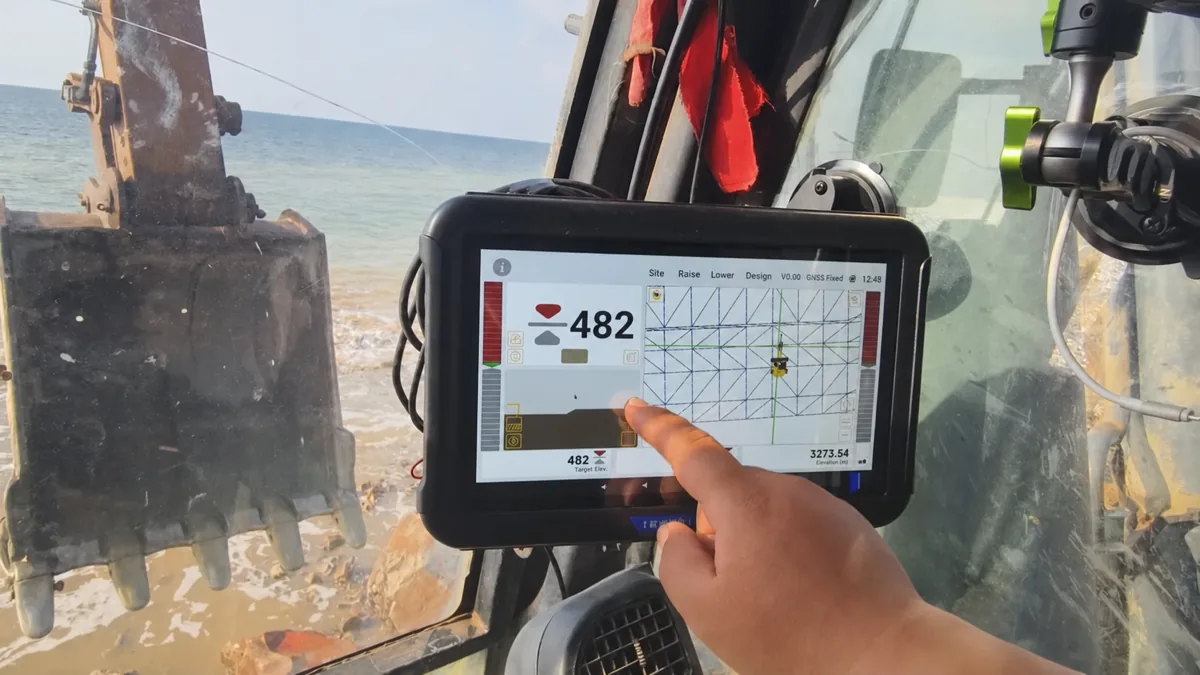
Retrofitting GPS guidance means adding a GNSS receiver, antennas, and motion sensors to an existing excavator without changing the machine’s hydraulic system, joysticks, or cab electronics. The guidance system reads the bucket position from satellite signals and sensors, then shows the operator where to dig on a screen. It does not drive the machine. The operator still controls everything; the system just removes the guesswork about depth, slope, and grade.
This matters because the biggest cost in earthwork is not the machine. It is the rework. A bucket that goes 5 cm too deep across a 500 m trench line costs hours of backfill and recompaction. Retrofit guidance attacks that cost directly.
The Compatibility Checklist
Not every machine takes a retrofit kit the same way. Work through this checklist before buying anything.
1. Cab roof and antenna placement. The GNSS antennas need a clear view of the sky. Problems appear when the roof has a falling-object guard, or air conditioning units, beacons, or cameras already block the antenna spot. A clear roof area may provide enough space, but the final position must also meet the mounting kit, guarding, antenna separation, and sky-view requirements.
2. Power feed for the display. The in-cab display needs 12V DC. Many modern excavators have auxiliary outlets. Older machines may need a qualified technician to add a fused circuit; the scope and installation time depend on the machine wiring and the selected display.
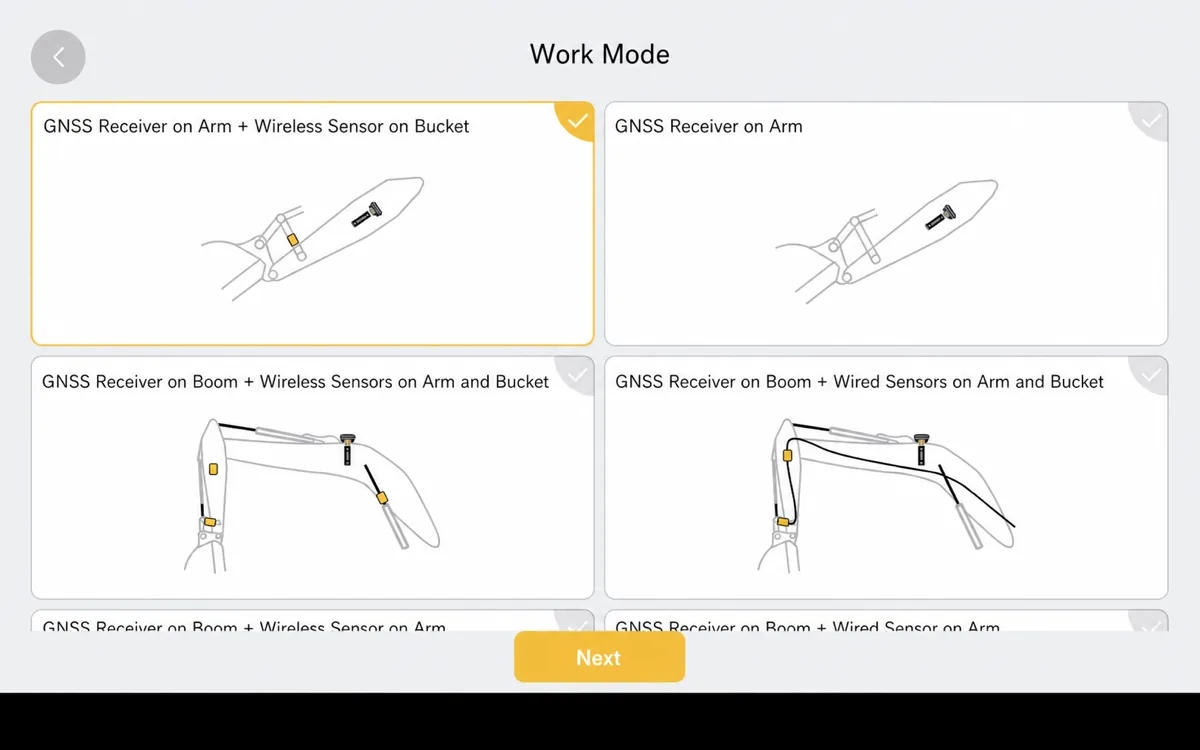
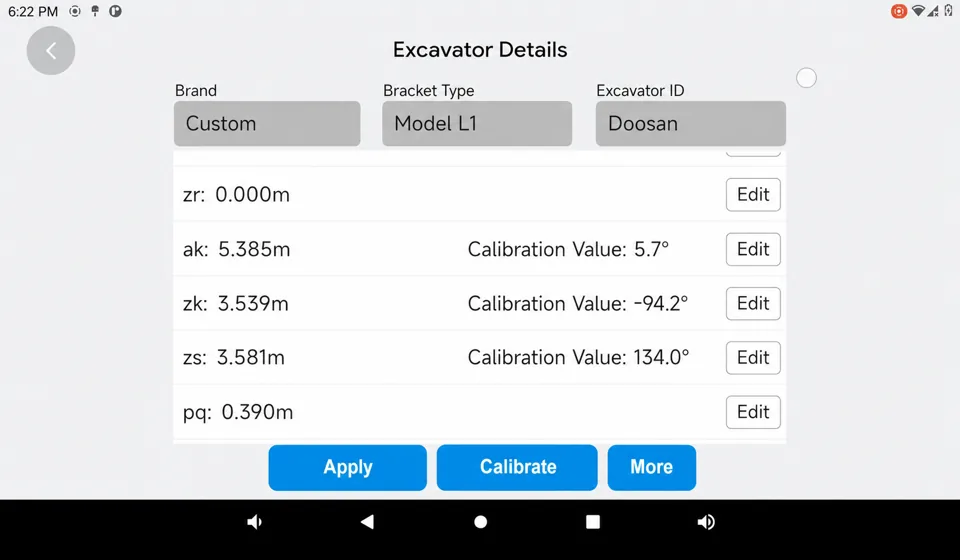
3. Boom, arm, and bucket geometry. Calibration enters boom length, arm length, and bucket dimensions, then swings the machine through a full rotation. The positioning calculation is not tied to one brand, but the kit still needs a supported sensor layout and calibration model. Telescoping, offset, long-reach, and other non-standard boom or attachment configurations require supplier confirmation.
4. Hydraulic behavior. Guidance assumes the bucket holds its position while you read the screen. Machines with tired hydraulic rams that drift when the joystick is released will show a slowly changing depth. A machine that cannot hold grade manually will not hold it with guidance either.
5. Year of manufacture. Year of manufacture is only an initial screening signal, not a pass-or-fail rule. Confirm the mounting, power, sensor layout, machine condition, and vendor support for the specific model.
KEY DATA POINT
Brand alone does not determine compatibility. GNSS positioning uses satellite signals and measured linkage geometry, but the exact machine model, boom, attachment, sensor mounting, and supported calibration profile must still be checked.
What Comes in a Retrofit Kit
| Component | What it does | Where it mounts |
|---|---|---|
| GNSS receiver | Computes position from satellite signals | Cab roof or boom |
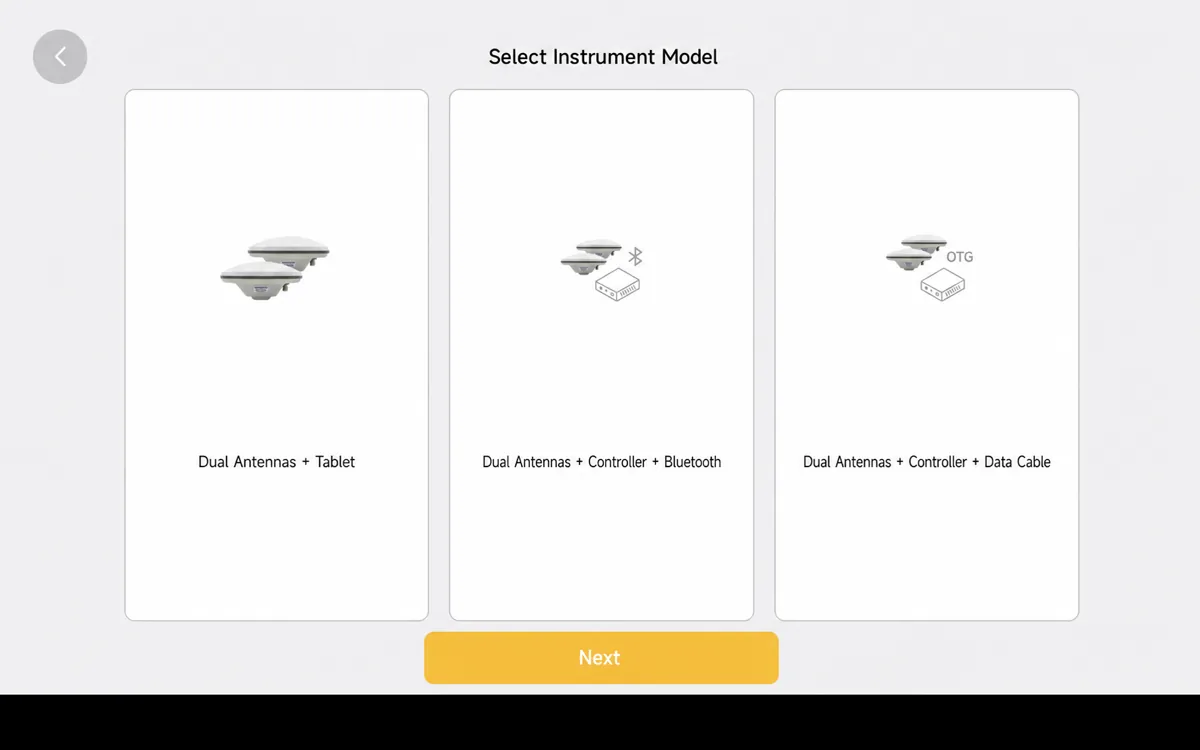
| Dual antennas | Measures heading so the machine knows which way it faces | Cab roof |
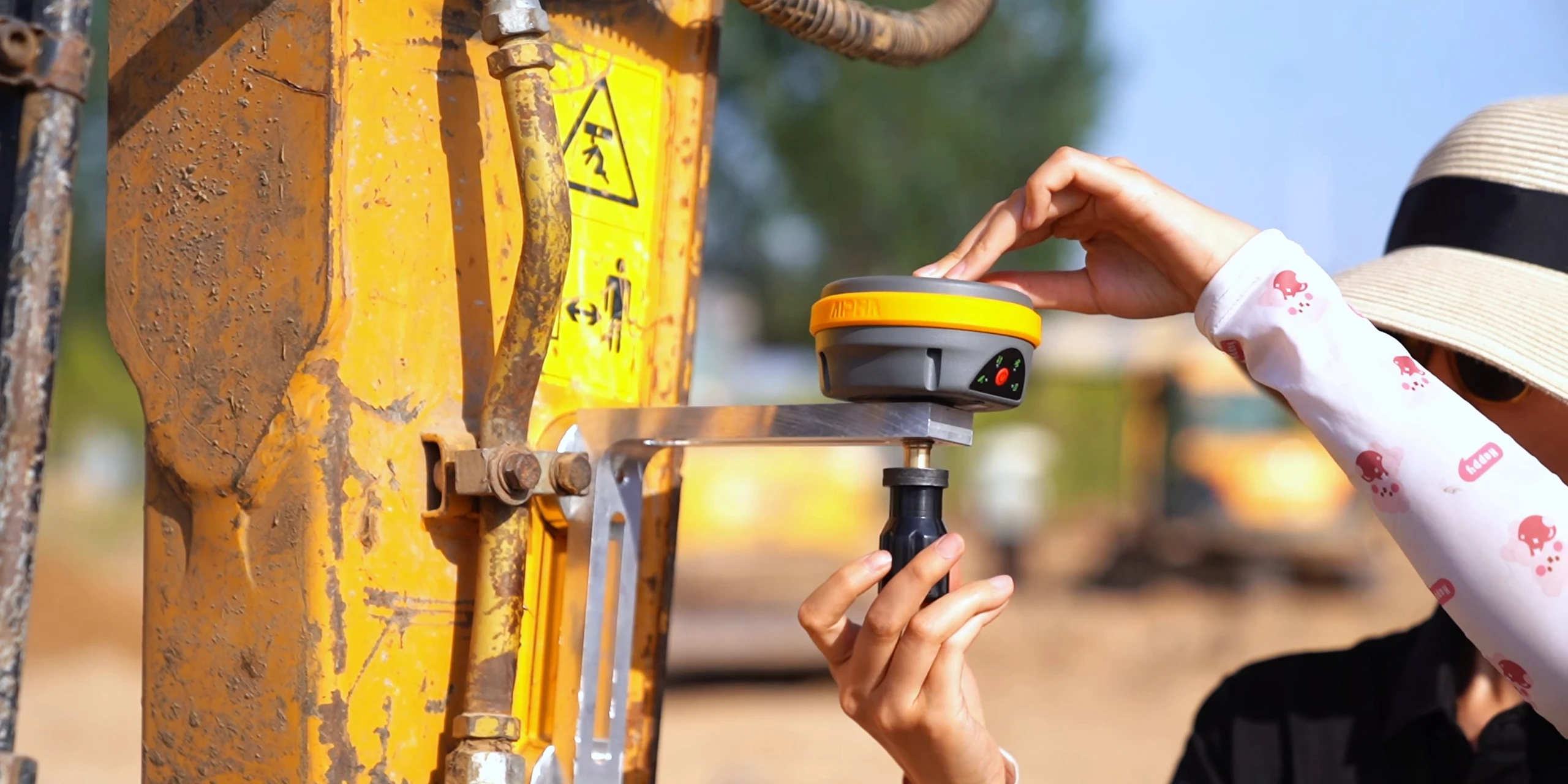
| IMU sensors | Track boom, arm, bucket angle for 3D bucket position | Linkage joints |
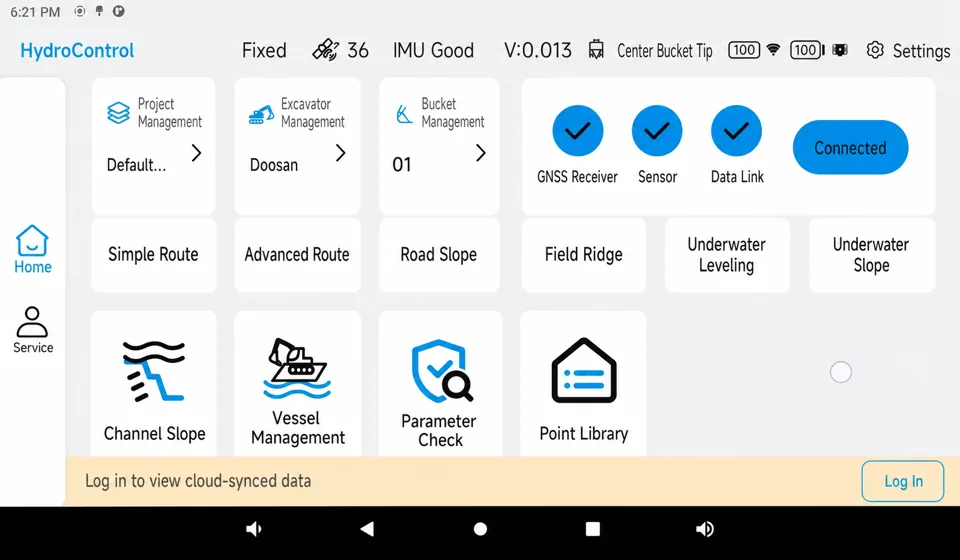
| In-cab display | Shows depth, slope, and grade to the operator | Cab, operator’s line of sight |
| Wireless bridge | Sends sensor data to the display without cabling | Roof to cab |
The wireless bridge is the part that changed the retrofit market. Older kits ran cables from the roof antennas down through the cab, which meant drilling holes and a half-day install. A wireless kit can reduce cabling between the roof and display. Total commissioning time still includes mounting, power setup, geometry entry, calibration, survey verification, and operator configuration.
Retrofit vs. Buying New with Guidance
| Dimension | Retrofit existing machine | Buy new with guidance |
|---|---|---|
| Upfront cost | Varies by accuracy tier, sensors, correction service, installation, and support | Machine price plus the factory option; request a regional dealer quote |
| Install downtime | Hardware mounting may be short; allow additional time for setup and validation | 0 (factory installed) |
| Existing fleet | One kit can move between machines | Stays with the new machine |
| Resale | A removable kit may limit permanent modification; verify resale and warranty terms | Guidance adds value if documented |
| Risk | You keep the machine you know | New machine, new payment |
For a detailed budget framework, see how much an excavator GPS guidance system costs and which factors change the final quote.
The Installation Process in Six Steps
Step 1: Pass the checklist. Confirm roof clearance, power feed, and boom geometry are workable.
Step 2: Mount the antennas. Dual antennas mount to the cab roof using the selected bracket. Whether drilling is required depends on the roof guard, bracket, and approved installation method.
Step 3: Mount the sensors. IMU sensors clamp to the boom, arm, and bucket linkage. Quick-release mounts may allow hardware to move between compatible machines, but each machine still requires its own measurements, calibration profile, and verification.
Step 4: Power the display. Plug the display into the cab’s 12V outlet or a fused circuit.
Step 5: Calibrate. Enter the boom, arm, and bucket dimensions from the machine’s spec sheet. Perform a full 360-degree swing calibration. Dig two test trenches and check against a survey reading.
Step 6: Verify with a grade check. Set the machine to cut at design depth on a test pass, then confirm with a level or total station.
Can Your Excavator Be Retrofitted? Quick Compatibility Check
If the machine regularly performs precision work → Calculate retrofit payback using rework, grade-checking, staking, utilization, correction-service, and training costs.
If the machine is near replacement → Compare both paths using remaining service life, repair risk, utilization, and the cost of a factory-guidance replacement.
If you run a mixed fleet across sites → Ask whether the kit is portable; supported machines need separate profiles and verification after transfer.
If your work is bulk earthmoving with ±10cm tolerance → Retrofit is optional; laser or simple guidance may be enough.
NOT SUITABLE WHEN
The machine is near replacement, has no approved antenna position, cannot hold a stable bucket position, uses an unsupported boom or attachment configuration, has very limited precision work, or requires automatic hydraulic control that the selected system does not support.
Common Misconceptions
“Retrofit voids the warranty.” Some guidance kits use external mounts and a standalone display, while other configurations connect to machine systems. Review the machine warranty and the selected kit’s installation requirements before work begins.
“It only works on certain brands.” GNSS guidance uses satellite signals and measured geometry, so the concept is not limited to one brand. Compatibility must still be confirmed for the exact model, boom, attachment, mounting method, and calibration profile.
“The operator has to learn a whole new system.” The display presents familiar cut, fill, and slope information in real time, but training time depends on operator experience, workflow complexity, site models, and the selected system.
“It will interfere with the machine’s electronics.” Many guidance-only configurations use their own sensors and display, but connections vary by system and feature set. Confirm power, data, CAN-bus, and hydraulic-interface requirements before installation.
Is an Excavator GPS Retrofit Right for Your Machine?
Retrofit GPS/GNSS guidance can bring precision information to a suitable existing excavator without immediately replacing the machine. A sound decision starts with model-specific compatibility, installation and calibration scope, required accuracy, correction service, operator workflow, and a site-based return calculation.
If You Only Remember One Thing: A machine that holds grade, has an approved antenna position, and supports a verified sensor and calibration layout is a strong retrofit candidate; confirm the full configuration and calculate ROI from your own site data before purchasing.
Request an Excavator Retrofit Compatibility Check
Send the make, model, year, boom or attachment type, typical work, and target accuracy. Nonnav will review the configuration and recommend the next compatibility checks before preparing a quote.
Frequently Asked Questions
References & External Resources
Industry reference for machine control system categories and capabilities.
Topcon’s excavator machine control product line and retrofit options.
Leica’s machine control solutions for construction equipment.
Industry research on construction technology adoption and payback.
Factory grade control options for comparison with retrofit kits.