
Nonnav · Updated August 23, 2026 · Estimated read time: 10 minutes
Key Takeaways
- Machine guidance accuracy is sold in spec sheets, but the accuracy your site actually needs is decided by the tolerance written into your contract and the type of work being done, not by what looks impressive on a brochure.
- A decision framework exists: match the accuracy class to the project type. Specify ±3cm for structures, utilities, and final grade; ±10cm is plenty for bulk earthworks, rough cut, and non-critical fill.
- Over-specifying accuracy costs real money: RTK + IMU systems that hold ±3cm typically cost 30-60% more than a ±10cm-grade system, and the extra precision is wasted on work that tolerates looser grading.
±2-3cm
±3cm Class Accuracy
±8-12cm
±10cm Class Practical
30-60%
Cost Premium ±3cm
$7.5-12k
First-Year Delta / Machine
What Do ±3cm and ±10cm Actually Mean on Site?
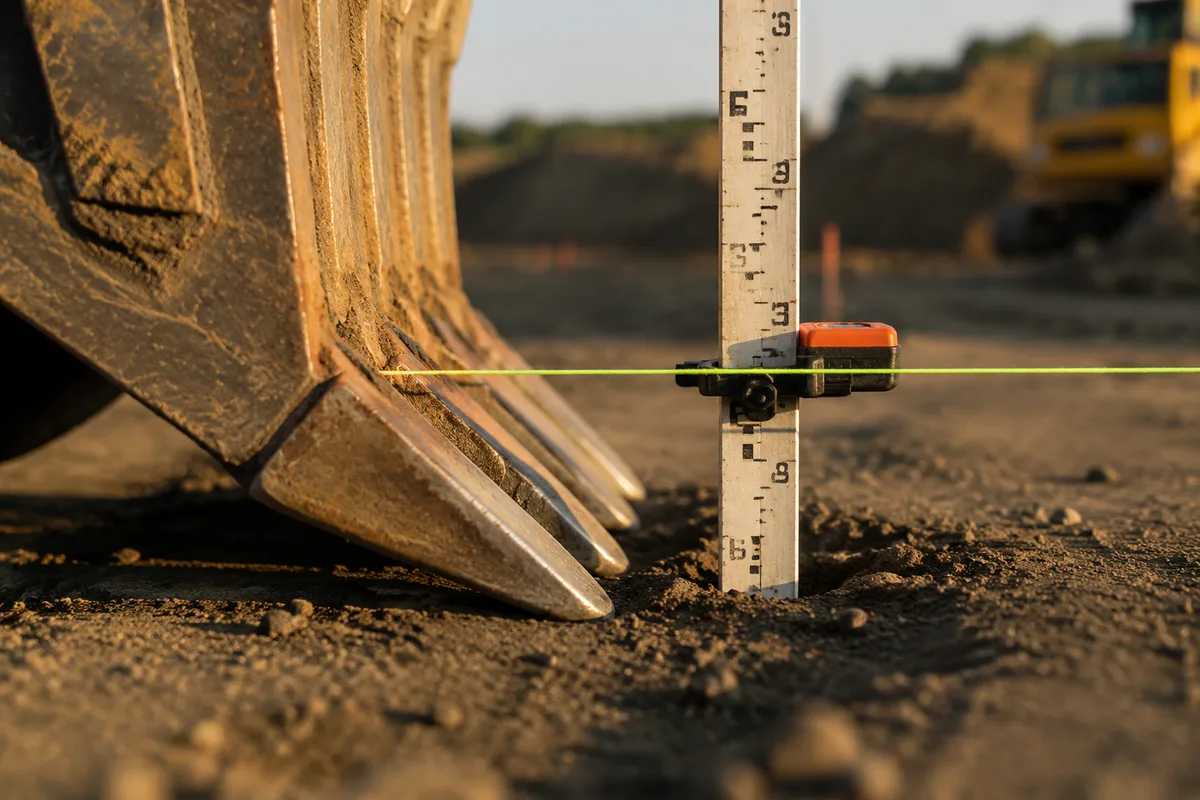
Before choosing, it’s worth being precise about precision. Accuracy classes describe how close the bucket teeth land to the design surface, measured statistically across a work shift.
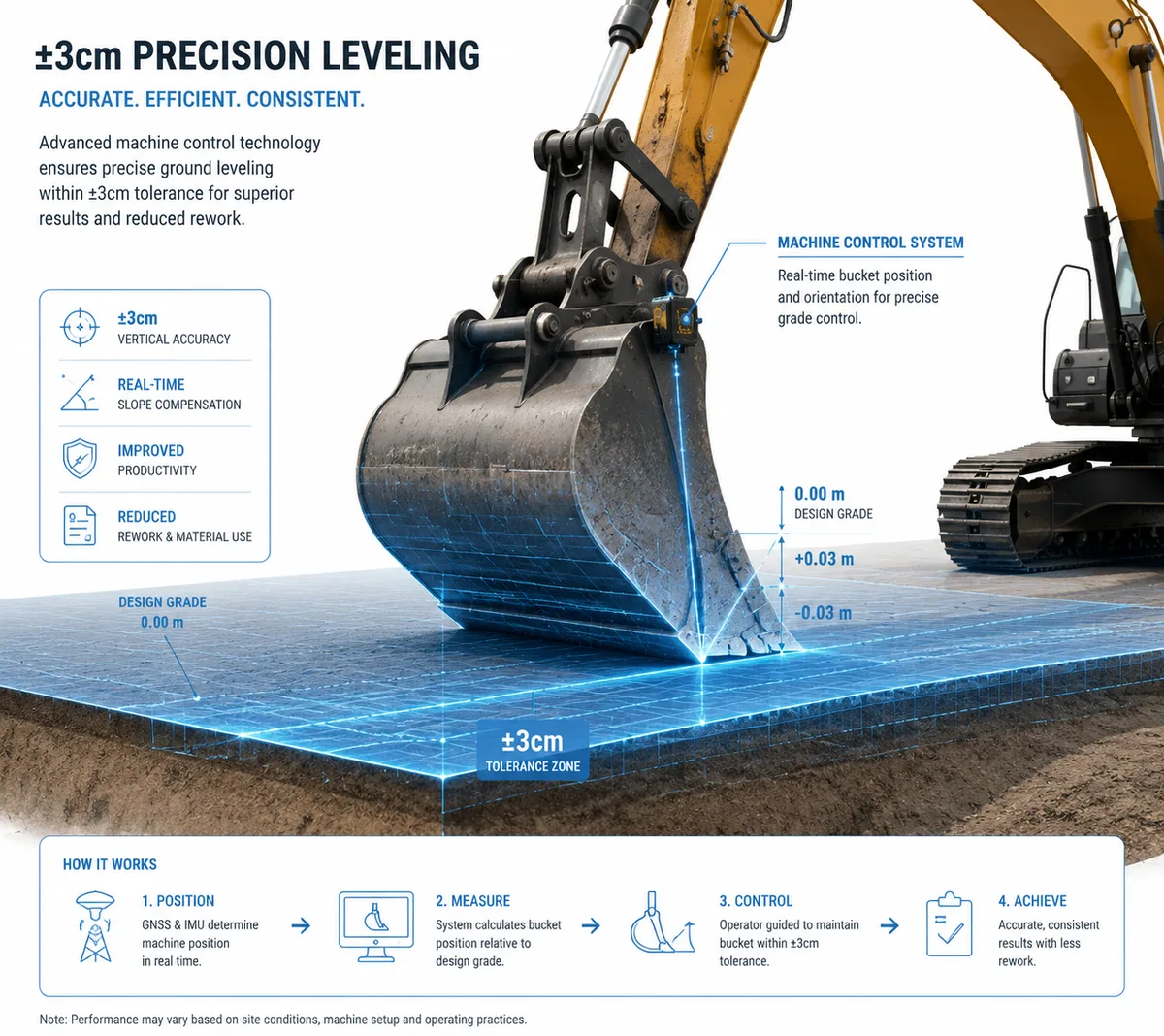
±3cm accuracy means the bucket tip stays within 3 centimeters of the target plane for roughly 95% of the time under normal conditions. This is the class that modern dual-antenna GNSS + IMU systems deliver, the kind used for structural work, utility trenches, and finished slopes.
±10cm accuracy means the bucket tip can deviate up to 10 centimeters from the design. That might sound coarse, but for a 50-meter-wide embankment being raised 2 meters at a time, 10cm of tolerance is invisible in the finished product after compaction.
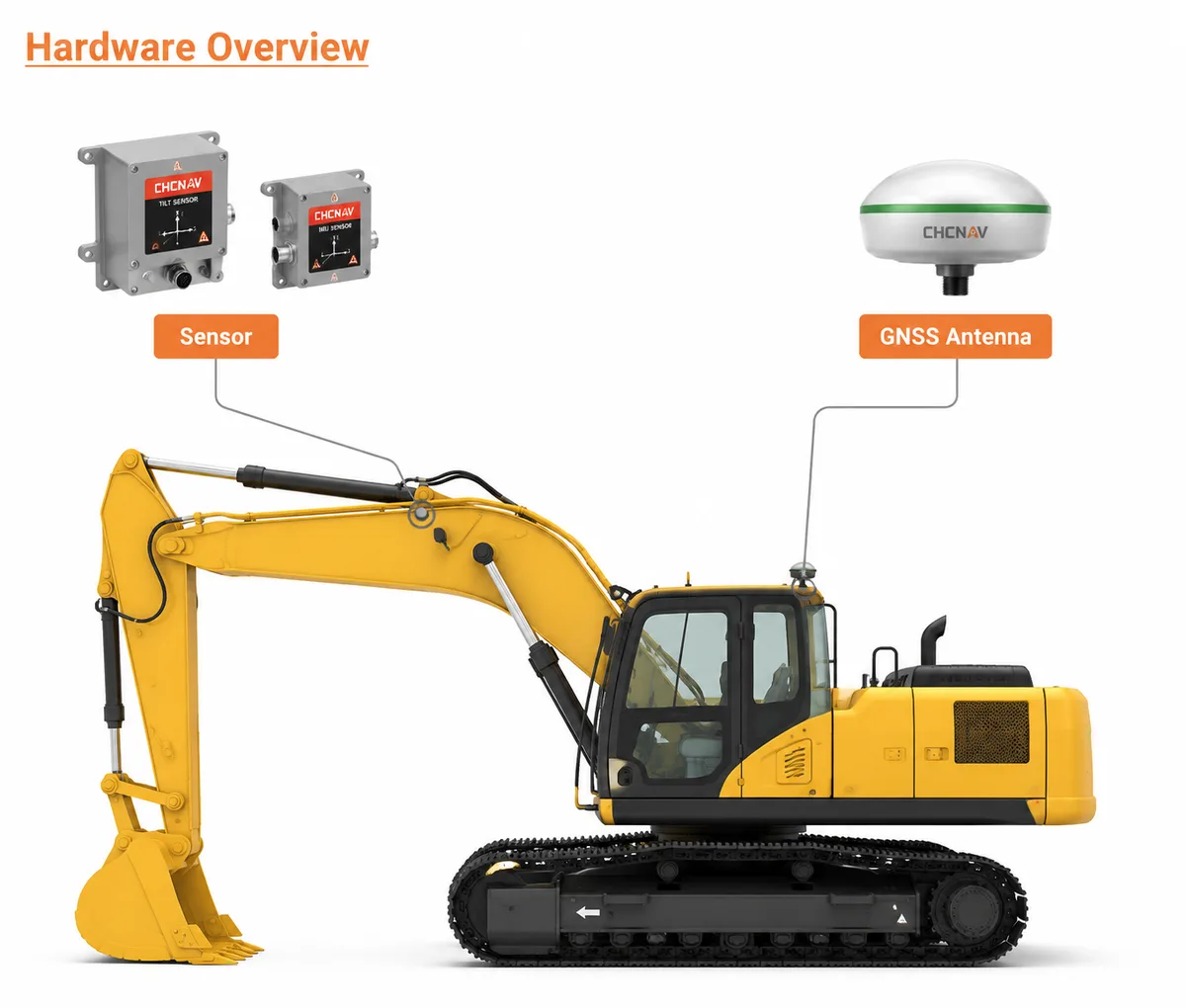
The gap between the two is not 7 centimeters of “small difference.” It is the difference between a system that must fuse RTK corrections with IMU sensor data in real time (complex, calibrated, expensive) and one that can work with a single GNSS antenna and a simple depth reference (simple, rugged, affordable).
Why “Buy the Most Accurate System” Is Bad Procurement Advice
The most common mistake in the industry is buying the most accurate system “just in case.” Here is why that reasoning fails:
1. Accuracy costs money you can measure. A dual-antenna RTK + IMU setup typically costs 30-60% more than a single-antenna ±10cm-class system. That delta is real cash, and if your work never needs ±3cm, you are paying for capability you will never switch on.
2. Precision slows down operations. High-accuracy systems are more sensitive to calibration drift. When an IMU sensor goes out of alignment on a rough site, the machine stops until recalibration. On bulk earthworks where the target is “close enough, compact it,” this downtime is pure loss.
3. Over-specification hides in the tender. If your contract specifies a surface tolerance of ±50mm (5cm) after compaction, a ±3cm guidance system is the right match. If it specifies ±10cm, buying a ±3cm system is a procurement error, not a quality decision.
4. The spec sheet number is not the site number. A system rated ±2-3cm in the lab can drift to ±5-6cm on a hot afternoon with poor satellite geometry or after a hard day of digging rock. Conversely, a ±10cm system on clean bulk grading holds its class reliably. The class is a design envelope, not a guarantee.
The Accuracy Decision Framework: Match the Class to the Work
This is the core framework that most guides skip. Instead of asking “how accurate can it be,” ask “what does this project type actually require?”
Project Type → Recommended Guidance Class
| Project Type | Contract Tolerance | Recommended Class |
|---|---|---|
| Structural foundations & footings | ±3cm or tighter | ±3cm (GNSS + IMU) |
| Utility trenching (water, gas, conduit) | ±3-5cm invert levels | ±3cm (GNSS + IMU) |
| Finished slopes & pavement subgrade | ±3cm | ±3cm (GNSS + IMU) |
| Highway bulk earthworks / embankments | ±5-10cm | ±10cm-class or ±3cm |
| Site cut & fill (rough) | ±10-15cm | ±10cm-class |
| Subdivision mass grading | ±10cm | ±10cm-class |
| Ponds, retention basins, landfill cells | ±10cm or looser | ±10cm-class |
| Rock excavation & presplit | ±10cm (benched) | ±10cm-class |
How to read this table: find your dominant project type in the left column. If the middle column says ±3cm, buy a ±3cm system. If it says ±10cm, a ±10cm-class system is the correct, lower-cost choice.
±3cm vs. ±10cm: Head-to-Head
| Dimension | ±3cm System | ±10cm-Class System |
|---|---|---|
| Typical accuracy | ±2-3cm horizontal, ±3-5cm vertical | ±8-12cm practical |
| System cost | High (dual antenna + IMU + RTK) | Moderate (single antenna, simpler receiver) |
| Installation time | 30-60 minutes + calibration | 15-30 minutes, less calibration |
| Calibration sensitivity | High; drift requires recheck | Low; rugged, tolerant of rough handling |
| Best for | Structures, utilities, finished grade, slopes | Bulk earthworks, rough cut/fill, mass grading |
| Payback period | 2-4 months on precision-heavy jobs | 1-3 months on high-volume earthmoving |
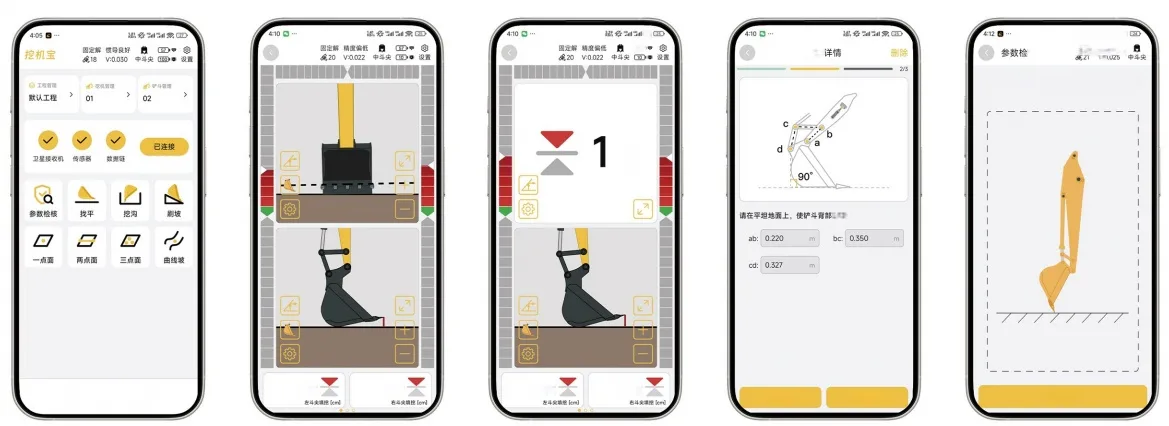
| Operator skill needed | Comfortable reading 3D displays | Simple depth/slope readout suffices |
| Rework risk if under-specified | Severe (contract tolerance missed) | Low (tolerance absorbed by compaction) |
KEY DATA POINT
The first-year cost delta between classes is roughly $7,500-12,000 per machine. For a five-excavator fleet, that is $37,500-60,000, the price of a small excavator or a year of fuel.
NOT SUITABLE WHEN
Bulk earthworks with ±10cm contract tolerance, rough sites that are hard on electronics, and high operator rotation. There, the extra precision never pays for itself and calibration becomes a net drag.
What Does the Accuracy Spec Actually Cost You?
Representative cost comparison for a mid-size contractor (2026 market ranges for retrofit systems):
First-Year Cost: ±3cm vs. ±10cm-Class
| Cost Item | ±3cm System | ±10cm-Class System |
|---|---|---|
| Hardware (antennas, receiver, display, sensors) | $12,000-20,000 | $6,000-10,000 |
| Installation & calibration | $1,500-3,000 | $800-1,500 |
| RTK correction subscription (annual) | $800-1,500 | $0-800 (often not required) |
| Estimated total (first year) | $14,300-24,500 | $6,800-12,300 |
Note: this compares accuracy classes, not brands. Total cost depends on dealer, region, and configuration. Get written quotes for both classes before deciding.
Decision Engine: If X → Choose Y
If your contract states surface tolerance of ±3cm or tighter (structures, utilities, finished slopes) → choose a ±3cm dual-antenna GNSS + IMU system. No lower-class system will pass inspection.
If your contract states ±5-10cm (highway embankments, subdivision grading) → choose ±3cm if you also do precision work on other jobs; otherwise a ±10cm-class system is sufficient.
If your work is bulk earthmoving with ±10cm+ tolerance (ponds, cut/fill, rock benches) → choose a ±10cm-class system and spend the savings on a second machine or more fuel hours.
If you are a mixed-fleet contractor (some precision, some bulk) → put ±3cm on the machines that do precision work, ±10cm-class on the rest. One spec does not fit a mixed fleet.
If you rent machines and install guidance per-project → choose wireless systems that transfer between machines; accuracy class matters less than installation speed here.
Common Misconceptions About Accuracy Classes
“More accuracy always means better quality.” False. Quality is meeting the contract tolerance. Delivering ±3cm on a ±10cm job is over-engineered spending, not better quality.
“A ±10cm system can’t do precision work.” Mostly false. Some ±10cm-class systems with a single antenna and good RTK correction hold ±5-7cm, which passes many moderate-tolerance specs. The line between classes is not a cliff.
“All GNSS guidance is basically the same accuracy.” False. The IMU fusion layer is what separates ±3cm from ±10cm. Systems without IMU sensors on the linkages cannot maintain accuracy during cab rotation and on slopes, exactly where excavators work.
“I’ll upgrade later.” Partially true, but upgrade cost is often 60-80% of buying new. Decide the class up front; retrofitting IMU later is not a cheap bolt-on.
How to Verify the Accuracy Your Site Actually Delivers
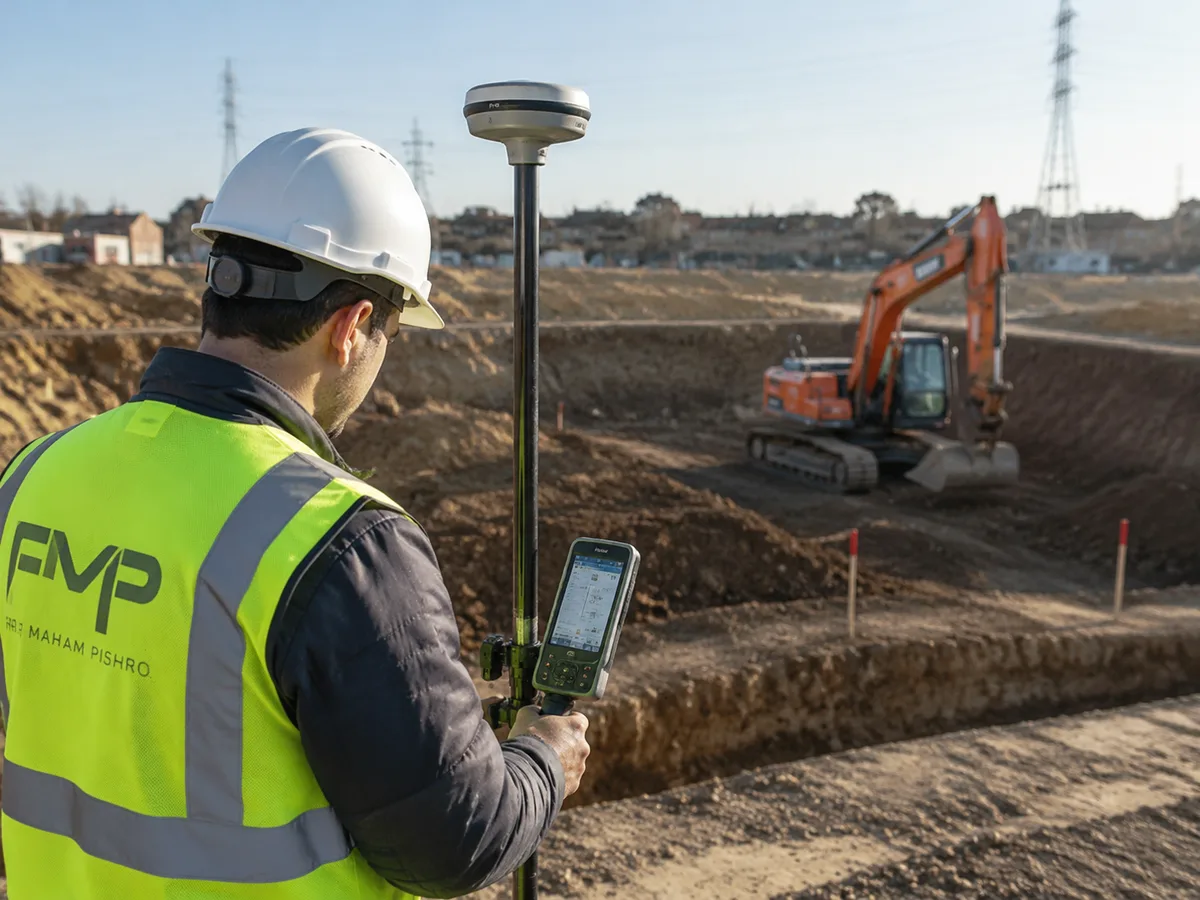
Choosing a class is step one. Verifying it on site is step two, and the step that most contractors skip:
- Read the contract tolerance first. Write it down. This is your target, not the brochure.
- Dig a calibration test section. Compare the in-cab reading against a survey check of the same surface. Do this at the start of each project.
- Check mid-shift drift. Survey the test section again after 4 hours. If deviation grows, recalibrate before continuing precision work.
- Track rework by machine. If one machine consistently misses tolerance, it is a calibration or system problem, not an operator problem.
- Record the RTK fix quality. Lost corrections (driving under tree cover, in deep cuts) are the #1 cause of silent accuracy loss. Operators must know how to catch it.
Conclusion
The accuracy question is “what accuracy does the work require,” not “how accurate can we buy.” The decision framework in this guide matches the ±3cm class to structures, utilities, and finished grade, and the ±10cm class to bulk earthworks and mass grading. It turns a vague equipment choice into a procurement decision with a clear payback.
Contractors who match accuracy to the contract save $7,500-12,000 per machine and pass inspection. Contractors who buy the most accurate system available pay for both.
If You Only Remember One Thing
Match the accuracy class to the contract tolerance: ±3cm (GNSS + IMU) for structures, utilities, and finished grade; ±10cm-class for bulk earthworks. Buying more accuracy than the work requires is a measurable cost, not a quality decision.
Frequently Asked Questions
References & External Resources
Industry research on machine control accuracy impact on productivity
Manufacturer documentation on machine control accuracy classes
GNSS manufacturer perspective on accuracy selection
Industry blog on 3D excavator guidance technology
Practical contractor guide to machine control accuracy
Operator training provider guide to accuracy specifications